Ramadan is a sacred month devoted to fasting, reflection, and spiritual renewal. Beyond abstaining from food and drink, Ramadan invites believers to nurture themselves through deeper engagement with the Quran, shaping how faith is understood, lived, and carried into the responsibilities of modern life.
Ramadan provides an opportunity to take small pauses in our daily lives. It creates space for restraint, reflection, and realignment. Within this space, the Qur’an takes on renewed significance not only as a text to be recited, but as a companion that speaks to the heart, the mind, and the conduct of daily life.
A Sacred Relationship Between the Quran and Ramadan
The connection between Ramadan and the Quran is foundational in Islam. Allah reminds us:
“The month of Ramadan [is that] in which was revealed the Qur’an, a guidance for the people and clear proofs of guidance and criterion.”
(Surah Al-Baqarah, 2:185)
Ramadan is therefore not only a month of fasting, but a month of guidance. Fasting disciplines desire and softens the heart, while the Qur’an provides clarity and direction. Together, they nurture taqwa, a deep remembrance of Allah that shapes both intention and action. The Prophet Muhammad ﷺ would intensify his engagement with the Qur’an during Ramadan. The Angel Jibreel reviewed the Qur’an with him in this month, reminding believers that Ramadan is not merely about completing recitation, but about strengthening one’s relationship with the revelation.
Nurturing the Self with Faith, Character, and Conscious Living
From an Islamic perspective, nurturing oneself is about aligning the heart with faith, actions with values, and intentions with purpose. Growth is measured not purely through outcomes but through intentions and effort.
Ramadan creates the conditions for this alignment. Hunger humbles the ego, while restraint sharpens awareness. When the Qur’an is read with reflection (tadabbur), it speaks to lived realities including patience in difficulty, gratitude in ease, humility in success, and accountability in everyday conduct. By simplifying life to its essentials, Ramadan allows these lessons to surface with clarity.
The Prophet ﷺ reminded us that fasting is not defined by abstinence alone:
“Whoever does not give up false speech and acting upon it, Allah has no need of him leaving his food and drink.” (Al-Bukhari)
This reminder shifts the focus from ritual to transformation. Fasting is meant to refine character – how one speaks, responds, and relates to others. The Qur’an reinforces this by repeatedly drawing attention to honesty, mercy, and responsibility as markers of meaningful worship.
This balance is captured succinctly in Surah Al-‘Asr, which reminds us that faith must be accompanied by righteous action, truthfulness, and patience.
“By time, indeed mankind is in loss. Except for those who believe, do righteous deeds, encourage one another to truth and patience.” Surah Al-’Asr (103:1–3)
Ramadan, then, is not a retreat from the world but a recalibration within it. It trains the believer to carry faith into relationships, work, and community life. Worship without character remains incomplete; character without faith lacks grounding. When belief and conduct move together, faith becomes visible not through words, but through behaviour quietly, consistently, and with purpose.
Living the Qur’an in Everyday Life
In Singapore’s multicultural and interconnected society, the Qur’an offers guidance that is both timeless and deeply relevant. It speaks to how believers navigate work, family, relationships, and community life with integrity and balance.
Allah reminds us:
“Indeed, prayer restrains from shameful and unjust deeds.”
(Surah Al-‘Ankabut, 29:45)
Similarly, engaging with the Qur’an during Ramadan is meant to restrain harmful tendencies and cultivate virtues such as honesty in dealings, patience under pressure, kindness in disagreement, and responsibility in public life.
The Qur’an nurtures an inner discipline that naturally flows outward, shaping how believers contribute to society with dignity and compassion.
Practical Ways to Nurture the Self Through the Qur’an in Ramadan
Nurturing the self with the Qur’an does not require perfection or large amounts of time. What matters is intention, consistency, and emotional presence.
Begin with intention. Approach the Qur’an not as a checklist, but as guidance meant for your life. Here’s how.
- Read with reflection rather than speed. Even a few verses read slowly and thoughtfully can leave a deeper impact than many pages read hastily.
- Create moments of quiet. Early mornings, late nights, or short pauses after prayer allow the Qur’an to settle into the heart.
- Let the Qur’an shape your thoughts. Simple actions like watching a bird fly or observing a leaf fall to the ground can prompt you to remember certain verses and stories in the Qur’an.
- Make it part of family life. Having regular Qur’an recitation sessions with your family can create precious opportunities for family bonding.
Ramadan as a Turning Point, Not a Pause
Ramadan is not meant to be a temporary spiritual retreat that ends with the sighting of the moon. It is meant to recalibrate the heart and reorient life.
Allah describes the Qur’an as:
“[This is] a blessed Book which We have revealed to you, [O Muhammad], that they might reflect upon its verses and that those of understanding would be reminded.”
(Surah Sad, 38:29)
Reflection is ongoing. Ramadan may begin the process, but its fruits are meant to extend beyond the month, shaping habits, choices, and relationships throughout the year.
A Shared Journey Within the Community
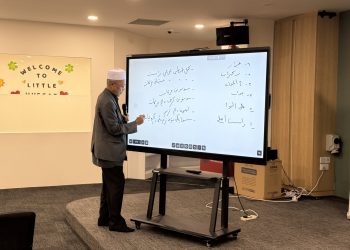
In Singapore, this renewed relationship with the Qur’an during Ramadan is often supported by community spaces and environments that encourage reflection. Institutions such as Jamiyah Academy form part of this wider ecosystem, supporting those who wish to continue learning the Qur’an beyond the month of Ramadan.
May this month be a time of renewal where hearts reconnect with the revelation, actions align with values, and the Qur’an becomes a companion not only for thirty days, but for a whole lifetime.