All too often, examinations are seen as the finish line. When the results arrive, we feel as though a final judgement has been passed. Good grades put us at ease. Poor grades make us worry. In both cases, we risk forgetting the true purpose of education.
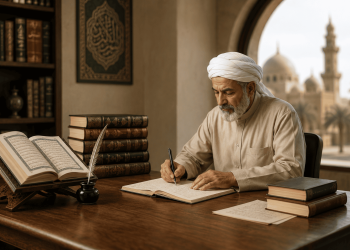
Imam Ash-Shafi‘i rahimahullah famously taught that every student of knowledge requires six things: an intellect, desire, effort, sustenance, the companionship of a teacher, and a long period of time.
- Intellect
A healthy human mind is naturally curious and has the ability to ponder, reflect and comprehend complex information.
- Desire
Students of knowledge are ceaselessly curious. They view examination results as temporary sources of joy or sorrow, but never as the end goal. They recognise that learning is an act of worship, and they strive to live and die in a state of seeking knowledge.
- Effort
Effort is the bridge between intentions and outcomes. Being hardworking is a key characteristic of students of knowledge.
- Sustenance
Books, writing materials, transport and conducive spaces to learn are all forms of sustenance that enable students of knowledge to learn.
- The companionship of a teacher
Students of knowledge seek teachers who specialise in their areas of interest. This enables them to achieve their learning goals in the most optimal manner.
- A long period of time
Knowledge is not meant to be acquired within a semester, a year, or even a degree programme. It is a lifelong journey that demands patience and perseverance.
Recognising Temporariness
Knowledge is a lifelong journey, whereas examination results are temporary milestones. When we perform well, it is natural to feel relieved and grateful, but success should not make us complacent. Intellectual growth begins to stagnate when achievement becomes an excuse to stop striving. Good results prove that effort can bear fruit, and they should inspire us to ask: What is the next mountain to climb? What new skill can be mastered? What new subject can be explored?
Conversely, when we do not achieve the results we had hoped for, we recognise that our disappointment is temporary. We turn to the stories of our prophets for guidance and inspiration. For example, when Prophet Muhammad ﷺ went to Ta’if to spread the message of Islam, the people shouted at him and pelted him with stones till he bled. Instead of losing hope, he prayed that the people of Ta’if would eventually accept Islam and Allah SWT accepted his du’a. Every incident in that event took place at the time that Allah knows was best.
Developing a Higher Purpose for Learning
Success today is often measured by numbers, GPA scores, rankings, and certificates, but true learning does more than fill the mind with information. It develops discipline, broadens the mind, cultivates humility, and refines character. To quote Imam Ash-Shafi’i, “Knowledge is that which benefits, not that which is memorised.”
Turning Results into Fuel for Intellectual Growth
Whether you are celebrating success or recovering from disappointment, use this moment as fuel. Set a higher goal. Learn a new skill. Seek guidance from mentors. Continue growing.
Years from now, you may not remember the exact marks you received. But you will remember the person you became because of the effort you invested, the lessons you learnt, and the determination you developed along the way.