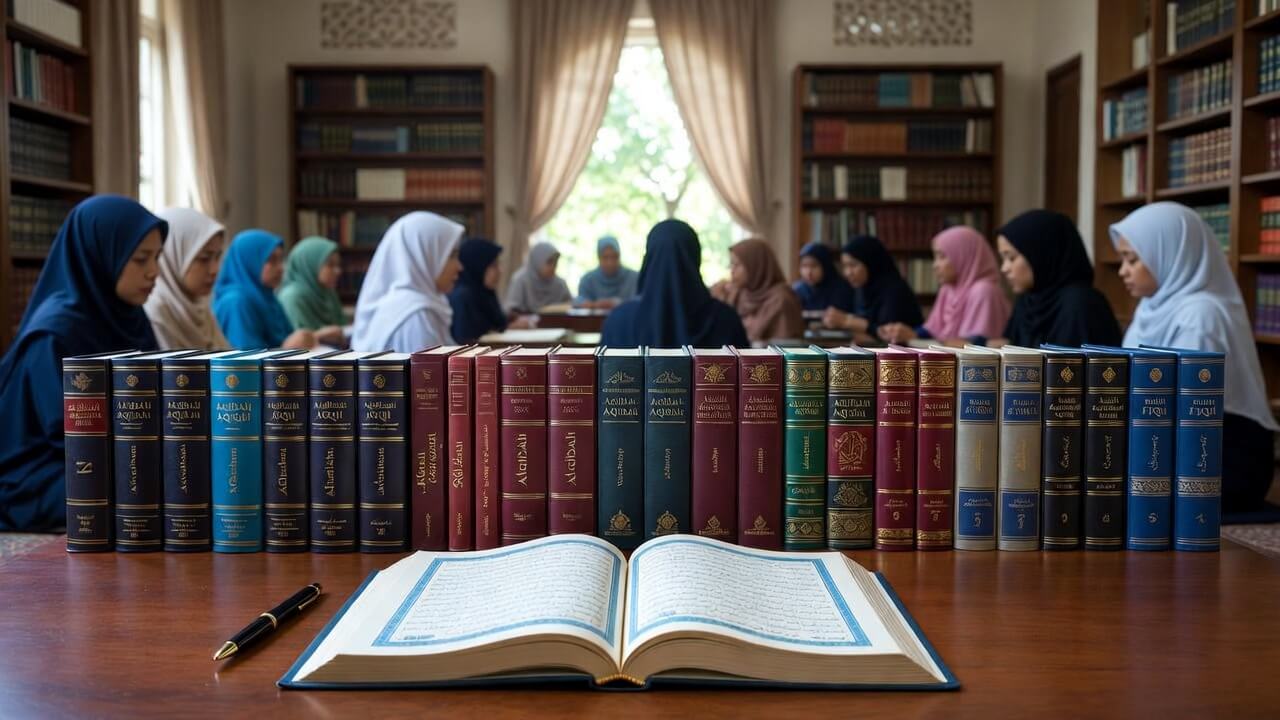
Within structured Islamic education in Singapore, aqidah and fiqh form two essential foundations that guide both belief and conduct. They are not advanced topics reserved only for scholars. They shape how a Muslim understands purpose, carries responsibility, and lives with clarity in a society that moves quickly and presents constant change.
Aqidah refers to the core beliefs of Islam. It encompasses what Muslims affirm about Allah, His attributes, revelation, the Prophets, the angels, the Day of Judgment, and divine decree. At its heart are foundational questions: Who is Allah? Why were we created? What does accountability truly mean? These are not abstract discussions. They influence how a person processes success, disappointment, uncertainty, and hope.
When tawhid, the oneness of Allah SWT, is studied with reflection and depth, it strengthens inner conviction. Reliance on Allah becomes conscious rather than habitual. Gratitude becomes deliberate. Patience during hardship is anchored in the understanding that trials are not random but purposeful. Aqidah gives stability because it offers a clear lens through which life is interpreted.
Fiqh complements this by guiding practical application. If aqidah defines belief, fiqh clarifies how those beliefs are lived. It addresses acts of worship such as prayer, fasting, zakat, and pilgrimage, while also covering daily matters including financial dealings, family responsibilities, dietary rulings, and ethical conduct. Through fiqh, faith is expressed through disciplined action.
For instance, recognising the obligation of prayer belongs to belief. Understanding how to perform ablution correctly, what nullifies prayer, or how to fulfil religious duties properly belongs to fiqh. Likewise, valuing honesty is rooted in aqidah, while knowing the rulings that govern contracts and transactions falls within jurisprudence. Together, they ensure that sincerity is supported by sound practice.
This integrated approach explains why many learners choose an Islamic certificate course in Singapore that combines aqidah and fiqh within a coherent syllabus. Studying them systematically prevents fragmented understanding and allows belief and action to develop in harmony.
For younger students, foundational concepts are introduced progressively through a Weekend madrasah in Singapore where learning builds steadily across age groups. For working adults seeking deeper clarity, structured adult Islamic classes offer the opportunity to revisit essential principles with greater maturity and reflection.
Living as a Muslim in Singapore today requires both conviction and clarity. Daily life involves professional demands, social diversity, and modern pressures that can raise complex questions. Aqidah provides inner certainty. Fiqh offers practical guidance. When both are studied with care, faith becomes steady rather than fragile, informed rather than assumed. It enables a Muslim to move through life with confidence, awareness, and integrity.