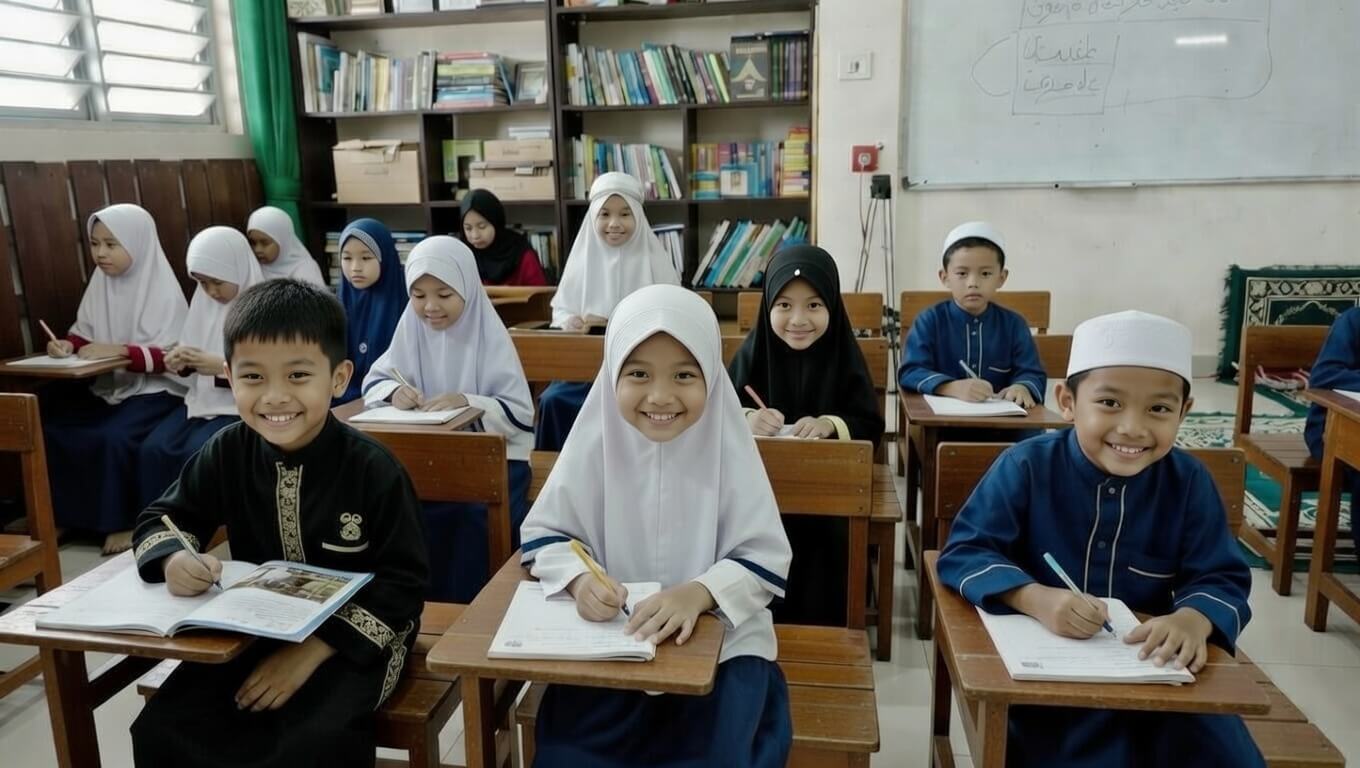
In Singapore, most Muslim children spend their weekdays in national schools, following a rigorous academic schedule. Weekend madrasah exists within this reality. It is a structured part-time Islamic education programme conducted outside regular school hours, usually on Saturdays or Sundays, ensuring that religious learning continues in a systematic and consistent way.
Unlike informal lessons at home, weekend madrasah follows a curriculum where students are guided through Quran recitation, aqidah, fiqh, sirah, and Islamic character development in a progressive manner. Each year builds upon the previous one. This continuity allows children to develop understanding gradually. Within a broader framework of Islamic education, such structure gives coherence to their learning journey.
One of the key strengths of weekend madrasah in Singapore is clarity of purpose. Children are not taught rituals in isolation but are guided to understand why prayer is obligatory, why fasting cultivates discipline, and why values such as honesty and compassion are central to Muslim identity. In a multicultural environment where they interact daily with peers from diverse backgrounds, this understanding strengthens confidence. It equips them to articulate their beliefs respectfully while remaining grounded in their own tradition.
Regularity also shapes formation. Faith is not strengthened through occasional talks or festive reminders alone. Weekly lessons create rhythm and teachers are able to monitor progress, correct recitation carefully, and address questions that arise from school or social settings. Over time, students internalise not only knowledge but also discipline and responsibility. Consistency nurtures familiarity with scripture and practice, reinforcing Quran literacy alongside core subjects.
In addition, parents remain central to this process. When families revisit lessons at home, encourage application in daily routines, or read together, learning becomes integrated rather than compartmentalised. Weekend madrasah then complements family life instead of competing with it. The partnership between home and classroom deepens retention and strengthens moral development.
A well organised weekend madrasah also recognises the demands placed on children today. Balancing academic expectations with religious learning requires thoughtful scheduling and realistic pacing. Clear syllabus and qualified educators ensure that lessons are purposeful without becoming overwhelming. This measured approach supports both intellectual growth and spiritual grounding.
For families seeking a structured pathway for their children’s Islamic education in Singapore, established islamic education institutions offering weekend programmes provide continuity and guidance across different age groups. Through systematic instruction and steady mentorship, children grow in knowledge, character, and confidence.