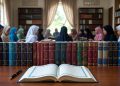
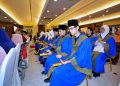
Islamic certificate courses are structured programmes that offer systematic study in core areas of Islamic knowledge. These typically include Quranic sciences, fiqh, aqidah, sirah, principles of jurisprudence, and Islamic history. Unlike public lectures or short workshops, certificate programmes are designed with continuity and academic progression in mind. They follow a defined syllabus, move through topics in logical sequence, and often include assessments to ensure that understanding is measured rather than assumed. Rather than relying on fragmented exposure through occasional talks, learners are guided through a curriculum that builds competence gradually and responsibly.
One of the distinguishing features of an Islamic certificate course is its methodology. Learning is scaffolded. Students begin with foundational concepts before engaging more complex discussions. For instance, before studying detailed rulings in fiqh, learners are introduced to the sources of Islamic law such as the Quran and Sunnah, and the basic principles scholars apply in deriving rulings. Exposure to these methodological foundations prevents oversimplification and encourages informed reasoning.
Similarly, aqidah studies explore theological principles before addressing contemporary questions. Topics such as divine attributes, prophethood, and accountability are examined through classical scholarship. This allows students to distinguish between established doctrine and cultural assumptions. Belief becomes grounded in knowledge rather than inherited familiarity.
Quranic studies within certificate programmes extend beyond recitation. Learners may be introduced to contextual understanding of revelation, introductory tafsir, and linguistic appreciation. Some pathways incorporate elements of Arabic study to support direct engagement with primary texts. This layered approach encourages intellectual depth rather than passive consumption.
Many individuals pursue an Islamic certificate course in Singapore because of this systematic design. Programmes such as the Sijil Pengajian Islam offer progression across core disciplines, enabling learners to strengthen belief, refine practice, and build analytical skills within a coherent framework.
These courses benefit different groups in meaningful ways. Youths considering advanced Islamic studies gain exposure to disciplined scholarship. Working adults who may not have had formal training earlier in life find accessible adult Islamic classes that allow them to revisit essential subjects with maturity and reflection. Community members preparing for volunteer or leadership roles acquire reliable grounding that supports responsible guidance.
Structured study also fosters intellectual humility. Regular lessons, guided readings, discussion, and evaluation reinforce the principle that knowledge requires effort and accountability. Students learn to reference sources carefully, recognise legitimate scholarly differences, and avoid simplistic conclusions.
Islamic certificate courses therefore represent more than academic credentials. They provide a sustained pathway into deeper understanding. By integrating belief, legal reasoning, textual engagement, and contextual awareness, they help learners move from informal familiarity to informed conviction. Through systematic study, knowledge becomes anchored, and faith is practised with clarity and confidence.